
Pool Permits in Warners Bay: Your Complete Guide to Lake Macquarie Council Approval Adding a…
Lake Macquarie Pool Council Regulations: What Homeowners Need to Know Before They Build
Most people spend months designing their dream pool. Choosing the shape, the finish, the decking. Then they sit down with a builder and find out the pool itself is the easy part.
The paperwork? That’s where projects stall.
We’ve seen Lake Macquarie homeowners lose weeks — sometimes months — because they didn’t know what was coming. A missed overlay, a wrong setback assumption, and suddenly the build that was supposed to start in spring is pushed to autumn.
Lake Macquarie pool council regulations aren’t designed to stop you building. But LMCC has its own local planning rules layered on top of NSW state legislation — and those layers catch a lot of people off guard. Our Pool Builders Lake Macquarie team works across the region’s residential and waterfront suburbs every week
In this guide, you’ll find everything covering DA requirements, fencing standards, setbacks, waterfront considerations, and realistic timeline expectations.
Table of Contents
- Understanding Your Approval Pathway: CDC vs DA in Lake Macquarie
- Pool Fencing Compliance — Breaking Down AS1926 Standards
- Setback Requirements — How Close Can Your Pool Be to Boundaries?
- Special Considerations — Waterfront and Environmentally Sensitive Properties
- Documentation Checklist — Everything You Need for Smooth Approval
- Timeline Expectations — From Application to First Swim
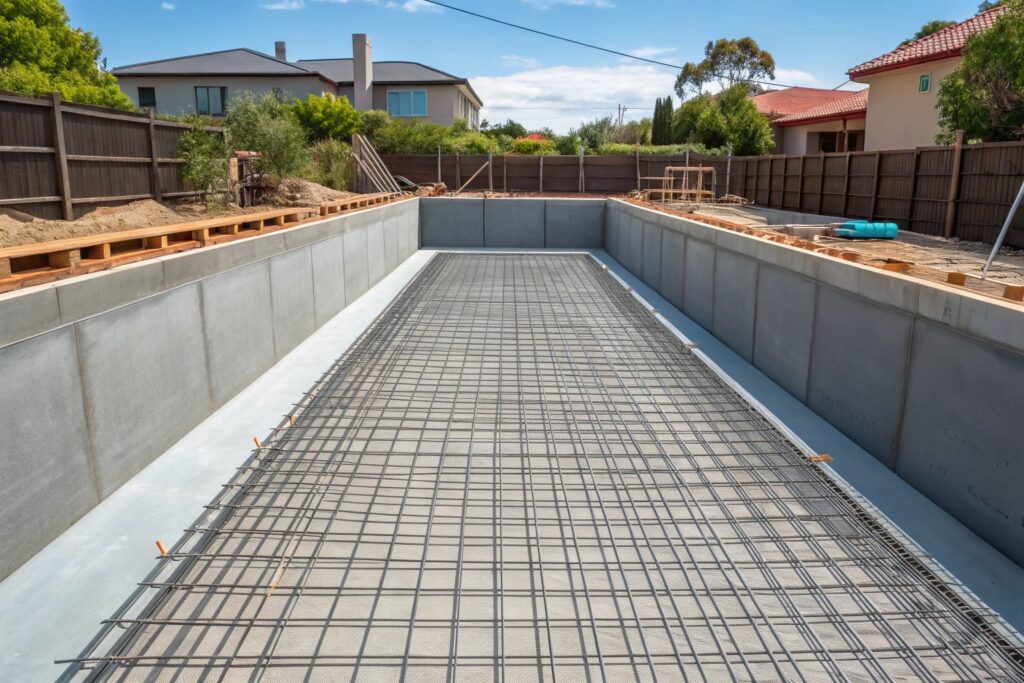
What Council Approval Do I Need to Build a Pool in Lake Macquarie?
Building a pool in Lake Macquarie requires one of two approval pathways — a Complying Development Certificate (CDC) for eligible properties or a Development Application (DA) for more complex builds — plus a Construction Certificate, NSW Swimming Pool Register entry, and a Certificate of Compliance before the pool can be used.
| Approval Type | Best For | Typical Timeframe | Lodged With |
|---|---|---|---|
| CDC | Standard builds meeting set criteria | 10–20 business days | Private certifier or LMCC |
| DA | Complex sites, overlays, non-standard setbacks | 40–60+ business days | Lake Macquarie City Council |
| Construction Certificate | All approved pools | Before construction begins | Private certifier or LMCC |
| Certificate of Compliance | All completed pools | After construction | LMCC or accredited certifier |
Understanding Your Approval Pathway: CDC vs DA in Lake Macquarie
NSW planning law sets the framework, but LMCC’s Local Environmental Plan 2014 and local overlays determine which pathway applies to your property. The CDC is faster and cheaper — but only available when every standard is met. One overlay or non-conforming setback removes that option entirely.
| CDC | DA | |
|---|---|---|
| Timeframe | 10–20 business days | 40–60+ business days |
| Assessed by | Private certifier or LMCC | Lake Macquarie City Council |
| Neighbour notification | Not required | 14-day notification period |
| Best for | Standard lots, no overlays | Waterfront, sensitive land, complex sites |
Before engaging anyone, run your address through LMCC’s ePlanning Spatial Viewer. Ten minutes online can confirm your pathway and flag any overlays before you spend money on plans.
Once your pathway is confirmed, fencing compliance is where most builds run into trouble next. The NSW Planning Portal outlines the full complying development framework for swimming pools across NSW.
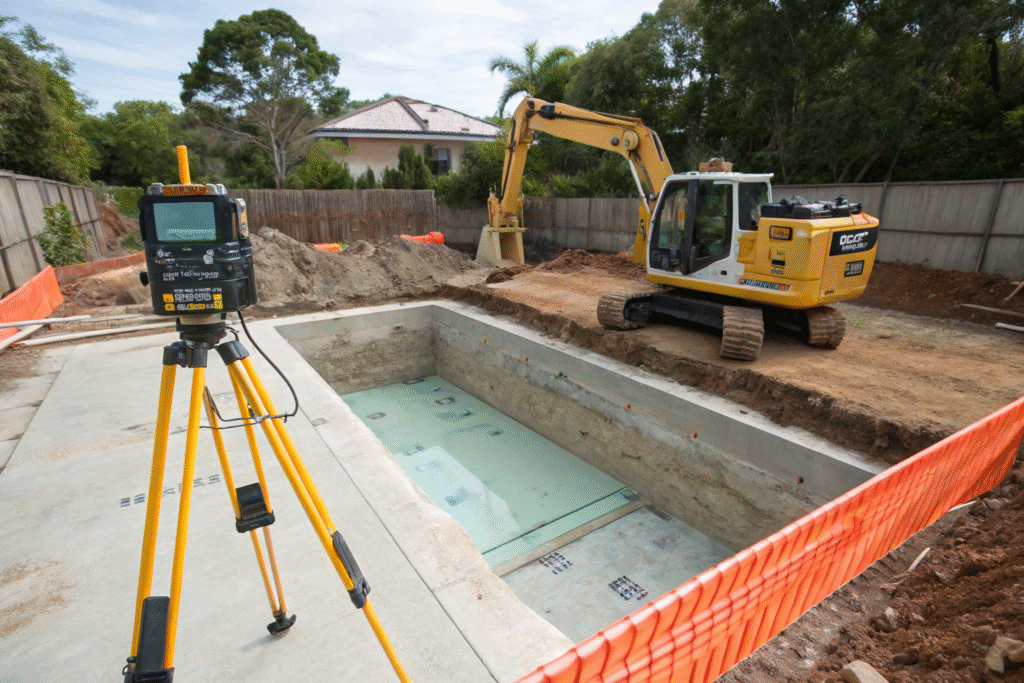
Pool Fencing Compliance — Breaking Down AS1926 Standards
What AS1926 Actually Requires
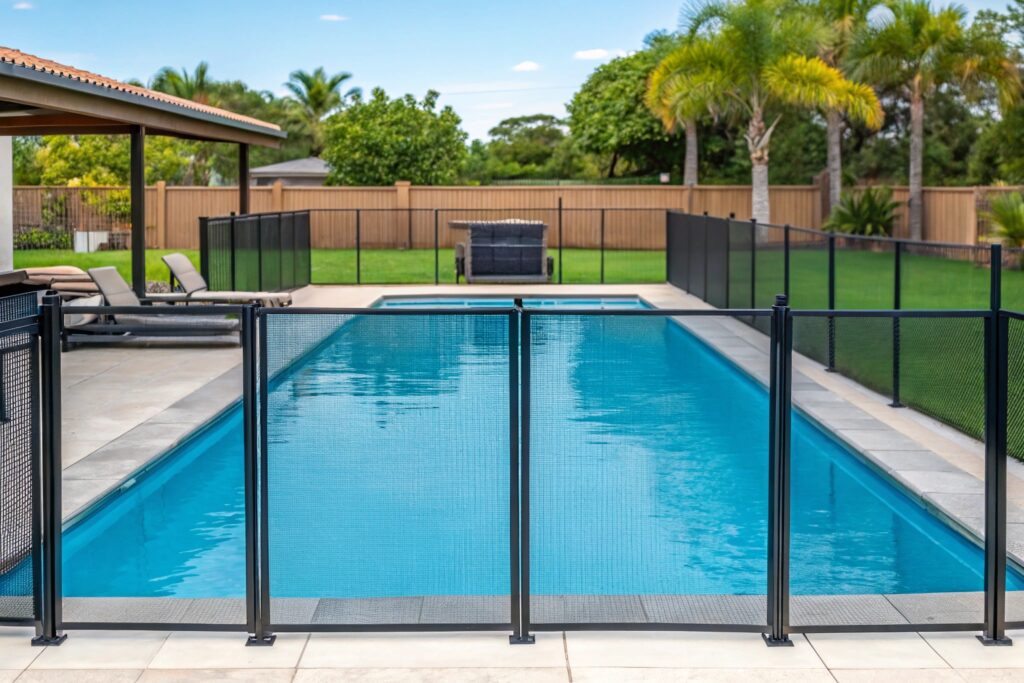
The rules aren’t complicated once you know them. Your pool barrier needs a minimum height of 1200mm, self-closing and self-latching gates, and a non-climbable zone (NCZ) of 900mm on the outside of the barrier. Anything within that NCZ that could be used as a foothold — garden beds, decorative panels, horizontal rails — fails the standard.
Common Fencing Mistakes That Fail Inspection
The failures we see most often aren’t from cutting corners. They’re from not knowing the detail. Gate latches installed on the wrong side. Horizontal rails on fence panels that make climbing easy. Outdoor furniture left sitting inside the NCZ. Garden beds built up against the fence line. Each one is a fail.
Temporary Fencing During Construction
A compliant temporary barrier is required from the moment excavation begins — not just when the pool is finished. This is one of the most overlooked requirements on residential builds.
Setback Requirements — How Close Can Your Pool Be to Boundaries?
Setback rules follow the NSW Housing Code baseline, but LMCC overlays, easements, and lot-specific conditions can increase minimum distances. One thing many homeowners miss — the waterline and pool equipment are measured separately.
| Boundary Type | Minimum Setback (Waterline) | Notes |
|---|---|---|
| Side boundary | 1m | May increase near easements |
| Rear boundary | 1m | Check for drainage easements |
| Primary street frontage | 3m | Applies to waterline, not equipment |
| Secondary street frontage | 1.5m | Corner lots — commonly overlooked |
| Sewer/stormwater easement | Varies | Requires LMCC or Sydney Water check |
Pool equipment has its own clearance requirements from boundaries and neighbouring dwellings — particularly relevant for noise in tighter suburban lots. It’s a design conversation worth having early, before plans are drawn and changes become expensive.
For most standard residential lots, setbacks are straightforward. Waterfront and environmentally sensitive properties are a different matter entirely.
Special Considerations — Waterfront and Environmentally Sensitive Properties
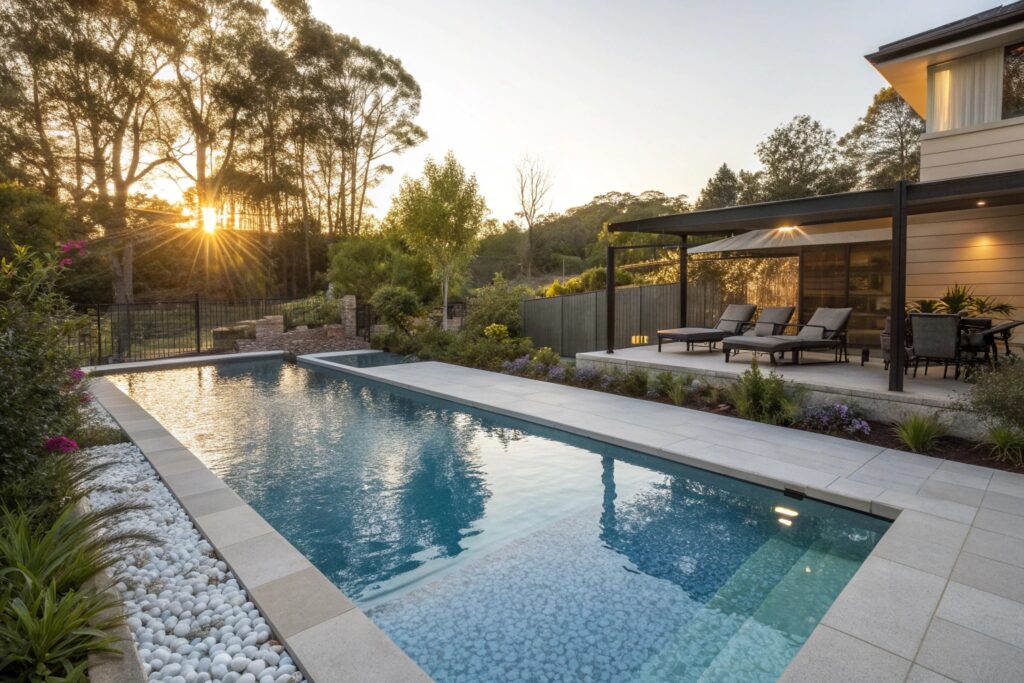
Lake Macquarie’s waterfront suburbs — Warners Bay, Belmont, Toronto, Speers Point — are among the most desirable locations for a pool build, and among the most regulated. Properties in or near sensitive areas almost always require a DA regardless of pool size or design.
Waterfront properties come with their own layer of complexity. Foreshore building line restrictions under LMCC LEP 2014, acid sulfate soils mapping and excavation implications, flooding overlays affecting slab design, and view corridor protections on elevated lakeside properties all need to be worked through before your pool design is finalised.
Other overlay triggers that push a build into DA territory:
- Biodiversity overlays — May require a Biodiversity Development Assessment Report (BDAR) for properties near foreshore or bushland corridors
- Bushfire prone land — BAL ratings affect materials for decking and shade structures adjacent to the pool
- Riparian land and waterway corridors — Setbacks from drainage lines can significantly constrain pool placement
- Coastal management areas — Additional NSW Coastal Management Act considerations apply within the coastal zone boundary
If your property appears on any of these overlays, a CDC pathway won’t be available. Budget for additional assessment reports from the outset — it saves time and frustration later.
LMCC’s ePlanning Spatial Viewer is the first check for any waterfront or sensitive land property.
Documentation Checklist — Everything You Need for Smooth Approval
Incomplete applications are the single biggest cause of avoidable delays. LMCC will return a lodgement if required documents are missing — resetting your place in the queue.
| CDC Application | DA Application |
|---|---|
| Site plan showing pool location and setbacks | All CDC documents, plus: |
| Pool specifications and engineering plans | Statement of Environmental Effects (SEE) |
| BASIX Certificate (if applicable) | Shadow diagrams (some sites) |
| Licensed contractor details | Neighbour notification material |
| Sediment and erosion control plan | BDAR (if biodiversity overlay applies) |
| Temporary fencing details | Acid sulfate soils assessment (if mapped) |
| NSW Pool Register pre-registration | Survey plan by registered surveyor |
Getting this right before you lodge isn’t just about speed. Every return and resubmission adds weeks to a timeline that most homeowners are already eager to move on.
Timeline Expectations — From Application to First Swim
One of the most common frustrations among Lake Macquarie pool buyers is underestimating total project duration. Understanding the full sequence sets realistic expectations and helps with financial and lifestyle planning.
| Stage | Typical Timeframe | Key Notes |
|---|---|---|
| Pre-application checks | 1–2 weeks | Overlay checks, CDC vs DA decision |
| Design and documentation | 2–4 weeks | Plans, engineering, BASIX, reports |
| CDC assessment | 10–20 business days | Via private certifier or LMCC |
| DA assessment | 40–60+ business days | Longer if objections received |
| Construction Certificate | Before excavation | Can run parallel to DA in some cases |
| Construction | 6–14 weeks | Varies by pool type, site, weather |
| Certificate of Compliance | Post-construction | Final inspection, barrier check, register update |
From first conversation to first swim, most Lake Macquarie pool builds run 4–9 months. Builders who tell you otherwise are working from a best-case scenario — not a realistic one.
Ready to Build? Let’s Check Your Block First
Not sure whether your property needs a CDC or DA? We’ll check your block and tell you exactly what’s required — no cost, no obligation.
Building on a waterfront block? Ask us about what your property overlay means for your build.
Pool Builders Newcastle 0240036418
What Our Clients Say
“We had no idea our block had an overlay. Pool Builders Newcastle picked it up straight away and handled the whole DA process for us. Couldn’t have done it without them.” — Warners Bay homeowner
“Really appreciated the transparency around timelines. No surprises, just a straight answer on what our Belmont property needed.” — Belmont homeowner
“From the first call they knew exactly what Lake Macquarie Council would require. Made the whole process a lot less stressful.” — Speers Point homeowner
About the Author
This guide was put together by the licensed team at Pool Builders Newcastle — SPASA members with hands-on experience taking pools through LMCC’s approval process across Lake Macquarie’s residential and waterfront suburbs.

