
Building a swimming pool is one of the biggest investments you'll make in your home,…
Cessnock Council Pool Regulations: Your Complete 2025 Guide to Stress-Free Pool Approval
You’ve been dreaming about that backyard pool for years. The kids are finally old enough to enjoy it, you’ve got the budget sorted, and you’re ready to transform your Cessnock property into the ultimate summer entertaining space. Then you start reading about council regulations, and suddenly your excitement turns into overwhelm. Will your pool meet setback requirements? What about fencing? Is your property in a heritage area or bushfire zone?
Here’s the good news: getting your pool approved by Cessnock City Council doesn’t have to be a nightmare. This guide breaks down everything you need to know about Cessnock council pool regulations, from setback requirements to bushfire zone considerations. Whether you’re in Abermain, Bellbird, or Weston, we’ll help you understand exactly what’s required so you can move forward with confidence.
Current Pool Regulations in Cessnock City Council (2025 Update)
Cessnock City Council follows NSW state pool safety regulations, but there’s some local variations you need to know about—especially if your property has unique characteristics like sloping land or bushfire risk.
All swimming pools and spas that can hold more than 300mm of water require council approval. This catches a lot of people off guard, particularly those installing above-ground pools or plunge pools. The assumption that smaller pools don’t need approval has cost homeowners thousands in rectification work and delayed swimming seasons.
As of 2025, Cessnock Council has tightened enforcement around compliance certificates. You’ll need a Certificate of Compliance before you can fill your pool with water, and inspections are now mandatory at multiple stages of construction. Skip this step, and you’re looking at fines starting at $1,100 for individuals.
The council also requires pools to be registered on the NSW Swimming Pool Register within 28 days of completion. This isn’t just paperwork—it affects your insurance coverage and future property sales. Buyers are increasingly walking away from properties with unregistered pools, knowing the liability they’d be inheriting.
Setback Requirements for Different Cessnock Neighbourhoods
Setback requirements determine how close your pool can be to boundary fences, buildings, and sewer lines. Get this wrong, and you’ll be facing expensive redesigns or even demolition orders.
Standard setback requirements in Cessnock require pools to be at least 900mm from any boundary fence. However, this can increase to 1.5 metres if your property backs onto a public reserve, road, or drainage easement. Properties in older Cessnock suburbs like Kitchener and Aberdare often have narrower blocks, making these setbacks particularly challenging.
Sewer line clearances are where things get tricky. Your pool needs to be at least 1 metre from any sewer main, and 3 metres from an inspection shaft. Before you start digging, dial before you dig—hitting a sewer line during excavation isn’t just expensive, it’s a health hazard that can shut down your entire project.
Properties on sloping land face additional setback challenges. If your Cessnock block has significant elevation changes, you may need engineered retaining walls to maintain proper drainage away from boundary fences. Council requires certification from a structural engineer for any retaining wall over 600mm high, adding both time and cost to your project.
Pool Fencing Compliance: Cessnock’s Specific Requirements
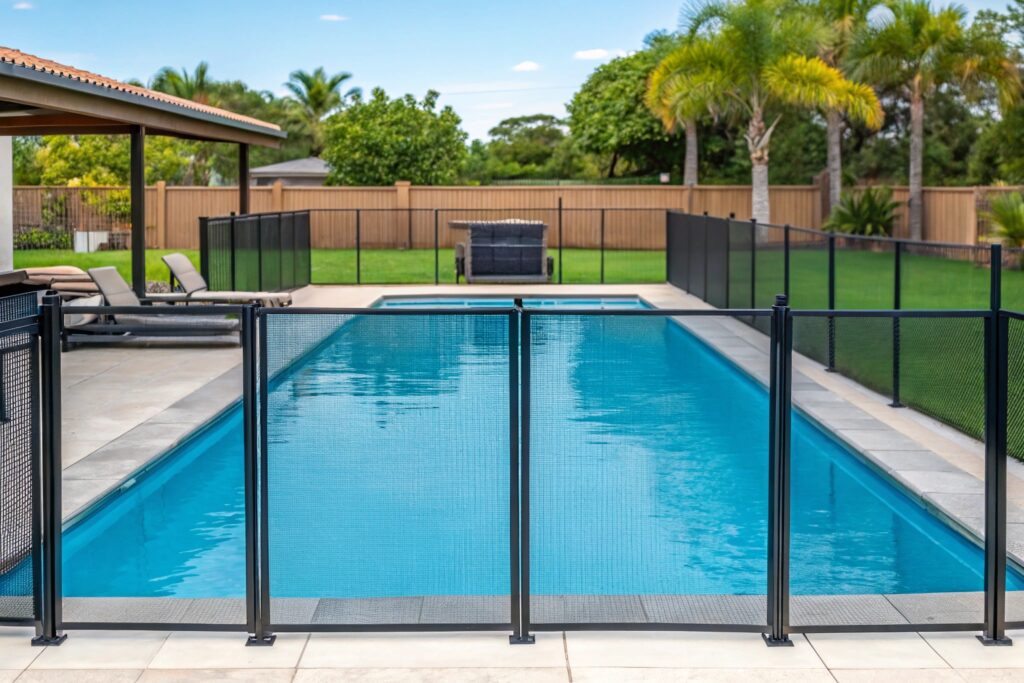
Pool fencing causes more compliance failures than any other aspect of pool installation. The rules are strict, and even experienced builders occasionally get caught out by specific requirements.
All pool barriers must be at least 1200mm high, measured from the ground level on the side where access is possible. This trips up homeowners who use existing boundary fences as part of their pool barrier—if that fence is only 1800mm high and there’s a garden bed on the other side that raises the ground level by 700mm, you’ve suddenly got a non-compliant barrier.
Gaps are where kids find their way into pools. Any gap under or through your fence must be less than 100mm. This includes gaps between vertical palings, gaps under gates, and the space between the bottom of the fence and ground level. Cessnock Council inspectors carry a 100mm sphere—if it fits through any part of your barrier, you’ve failed inspection.
Gates must be self-closing and self-latching, with the latch positioned at least 1500mm above ground level. Magnetic latches are popular, but they must be tested to Australian Standards AS1926.1. Cheap hardware store latches often fail inspection because they don’t close properly or can be forced open by determined kids.
Bushfire Zone Regulations for Swimming Pools in Cessnock
Large parts of Cessnock City Council fall within designated bushfire prone land, particularly properties backing onto national parks, state forests, and rural areas. If your property is in a bushfire zone, your pool isn’t just about summer fun—it becomes part of your bushfire asset protection strategy.
Pools in bushfire zones must meet additional construction standards under NSW Planning for Bushfire Protection guidelines. This affects everything from equipment placement to landscaping around your pool area. Council requires a Bushfire Safety Authority as part of your DA approval, and your pool design needs to demonstrate how it contributes to property protection during bushfire events.
Equipment like pumps, heaters, and filters must be positioned in defensible space zones and protected from radiant heat and ember attack. Properties in Bellbird, Ellalong, and parts of Weston backing onto bushland face the strictest requirements.
How to Streamline Your Pool Approval Process in Cessnock
Getting your pool approved doesn’t have to take months or involve multiple resubmissions. Smart planning and proper documentation upfront can cut your approval timeline in half and save you thousands in consultant fees.
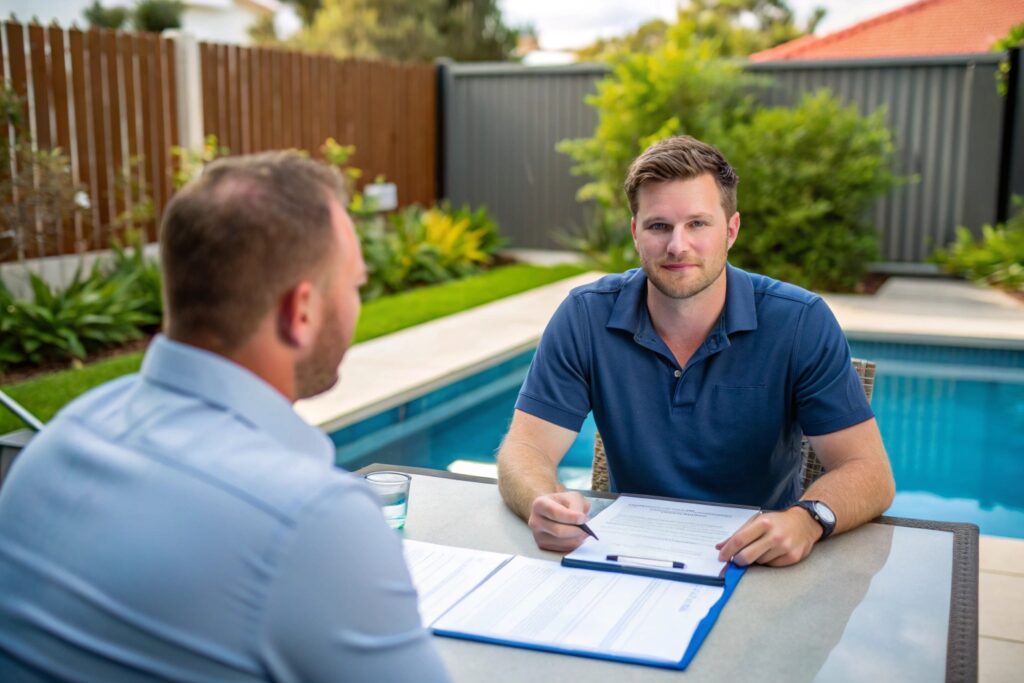
Start with a pre-lodgement meeting at Cessnock Council offices. This free service lets you sit down with a council planner who’ll review your preliminary plans and flag potential issues before you spend money on detailed drawings. They’ll tell you upfront if your property has heritage overlays, bushfire zones, or drainage easements that could complicate approval.
Hire a licensed pool designer or draftsperson who knows Cessnock Council’s requirements inside out. Generic pool plans from interstate companies often miss local variations in setback requirements or bushfire provisions. A local professional who regularly deals with Cessnock Council can design your pool to meet all requirements first time, avoiding the costly back-and-forth of plan revisions.
Common Reasons for Rejection and How to Avoid Them
Understanding why pool applications get rejected helps you avoid the same mistakes. Cessnock Council’s most common rejection reasons are predictable and entirely preventable with proper planning.
Inadequate drainage plans cause more rejections than any other single issue. Your pool needs to drain away from neighbouring properties and buildings, with calculations showing overflow capacity during heavy rain. Cessnock’s clay soils in suburbs like Kitchener and Aberdare are particularly prone to water pooling, so council scrutinises drainage more heavily in these areas.
Non-compliant pool barriers trip up even experienced builders. The most common failures are climbable zones within 900mm of the fence, gates that don’t self-close properly from any position, and gaps exceeding 100mm anywhere in the barrier system.
Missing engineer’s certifications for structural elements get applications knocked back immediately. If you’re building a pool on sloping land, near retaining walls, or in areas with reactive soil, you need structural engineering sign-off. Cessnock Council won’t accept generic engineering templates—they want site-specific calculations for your exact soil conditions and proposed pool design.
Get Your Cessnock Pool Approved Without the Stress
Understanding Cessnock council pool regulations doesn’t have to feel overwhelming. With proper planning, complete documentation, and local expertise, you can move through the approval process smoothly and start enjoying your pool by next summer.
Ready to start your pool project with confidence? Our team knows every detail of Cessnock Council’s requirements and has successfully navigated approvals for hundreds of local properties. Contact us today for a free consultation where we’ll assess your property, explain exactly what’s required, and give you a realistic timeline for getting your pool approved and built.

