
Building a swimming pool is one of the biggest investments you'll make in your home,…
Building Pools in Maitland’s Challenging Soils: Expert Solutions
You’ve been dreaming about that backyard pool for years. You’ve got the design picked out, the budget sorted, and you’re ready to start digging. But here’s something most Maitland homeowners don’t realise until it’s too late—the ground beneath your feet is probably going to fight you every step of the way.
Maitland soil conditions for pools aren’t like the sandy coastal blocks you see closer to Newcastle. Depending on which suburb you’re in, you could be dealing with reactive clay that swells and shrinks with the seasons, or sandy loam that needs serious reinforcement. Get the soil assessment wrong, and you’re looking at cracks, structural movement, and repair bills that’ll make you wish you’d just kept using the local pool instead.
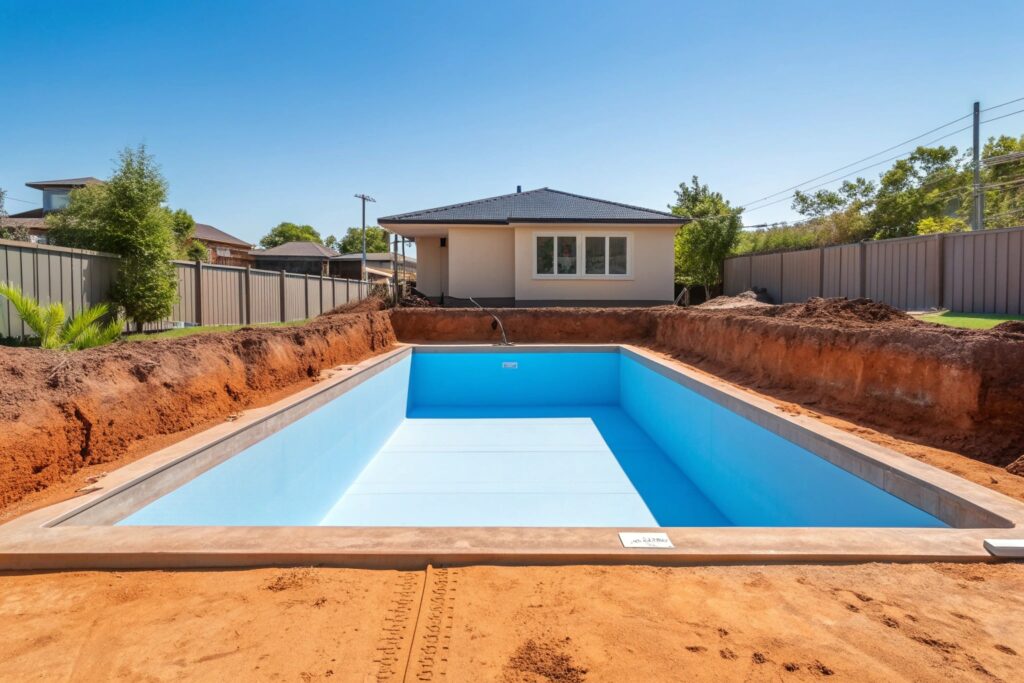
Understanding Maitland’s Diverse Soil Profiles
Maitland’s not a one-size-fits-all kind of place when it comes to what’s underground. Drive from East Maitland to Aberglasslyn, and you’re crossing completely different soil types that’ll each throw their own challenges at your pool build.
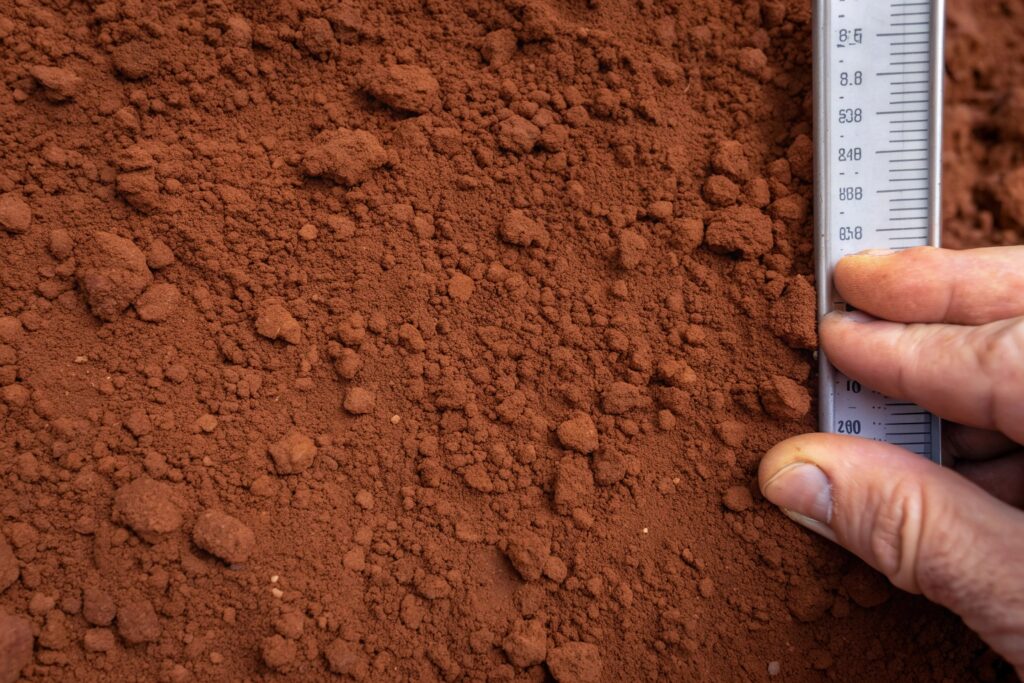
The older suburbs around East Maitland and Lorn? You’re mostly dealing with heavy clay soils. These are the reactive ones—they expand when they get wet during our summer storms, then contract during dry spells. That constant movement puts pressure on pool structures that weren’t engineered to handle it.
Head out towards the newer developments in Rutherford or Gillieston Heights, and you’ll often find sandy loam or mixed soil profiles. These soils can have poor load-bearing capacity, meaning your pool needs extra foundation work to avoid settling unevenly over time.
Then there’s the areas closer to the Hunter River floodplain—places like Morpeth or parts of Largs. Here you might encounter high water tables and alluvial soils that complicate excavation and drainage. Any pool company that gives you a quote without doing a proper soil test is taking a massive gamble with your money.
Engineering Challenges: Pool Construction in Clay-Heavy East Maitland
Pool construction in clay soil in Maitland is where most builders either prove their expertise or expose their shortcuts. Reactive clay soils—the type you’ll find across much of East Maitland, Tenambit, and parts of Maitland Vale—have what engineers call a “high plasticity index.” When it rains, clay absorbs water and expands. When we hit a dry stretch, it shrinks back down. That cycle creates movement around your pool shell that can lead to cracking, pipe damage, and structural failure.
I’ve seen pools in East Maitland where the owners skipped proper soil prep to save a few thousand bucks upfront. Twelve months later, they’re staring at cracks running down the pool walls and coping that’s lifting away from the shell. The repair bill? Often more than what they “saved” by going with the cheaper quote.
Here’s what proper clay soil preparation looks like: overexcavation and replacement with compacted crushed rock, pier and beam systems for extremely reactive sites, engineered drainage that moves water away before it saturates the clay, and reinforced pool shells with extra steel and thicker walls. The Hunter Valley’s been dealing with reactive clay for generations, and good pool builders here know you can’t just dig a hole and drop in a shell.
Foundation Solutions for Different Maitland Suburbs
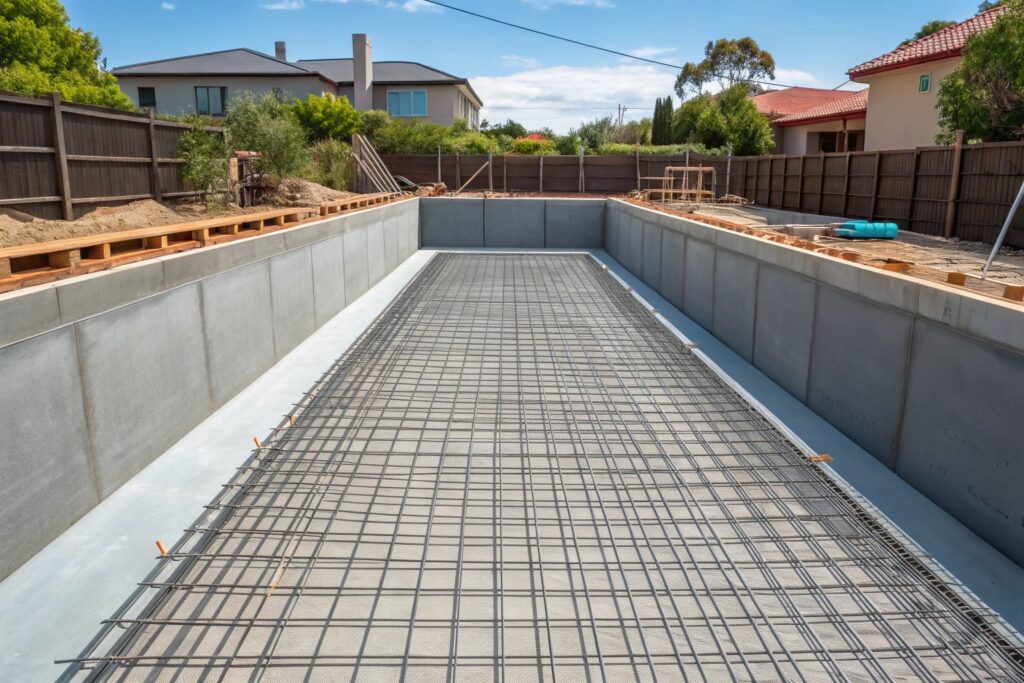
East Maitland and Lorn sit on some of the most reactive clay in the region. Your Hunter Valley pool foundation here needs a minimum 150mm compacted crushed rock base, sometimes up to 300mm depending on soil classification. The pool shell itself often needs Class N reinforcement mesh rather than the standard Class L you might use in better conditions.
The newer estates in Rutherford and Gillieston Heights often have cut-and-fill sites with three different soil types across a single block. Smart foundation work here involves soil stabilisation across the entire pool footprint—cement stabilisation of weak areas, or creating a uniform engineered fill base that distributes loads evenly.
Sandy soils in Aberglasslyn and Chisholm drain well, but they can also wash away or compact unevenly under load. Pools in these suburbs need wider footings to spread the weight, and often require geotextile fabric layers to prevent soil migration under the shell.
Building near the floodplain in Morpeth or Largs comes with high water tables and poor drainage. Some sites need dewatering during construction just to keep the excavation from turning into a muddy lake. Pools in these locations often require deeper foundations, more aggressive drainage systems, and sometimes even flood-proofing measures if you’re in a known flood zone. Council’s pretty strict about what they’ll approve near the river, and for good reason.
How Poor Soil Assessment Leads to Pool Structural Problems
Skip the soil testing phase, and you’re basically building a $60,000 gamble in your backyard. When reactive clay wasn’t properly identified and managed, the pool shell cracks as the ground moves beneath it. Pool plumbing runs through the soil around your pool, and when that soil shifts, pipes crack or separate at joints. The decorative coping and waterline tiles are the first casualties when a pool starts moving.
When one end of the pool sits on different soil than the other, you get differential settlement. The pool tilts slightly, water depth becomes uneven, and the structure experiences stress it was never designed to handle. The concrete deck, retaining walls, and landscaping around the pool all suffer when the foundation wasn’t engineered properly.
A proper soil assessment costs maybe $800-1,500 for a standard residential block. Compare that to the $15,000-30,000 it can cost to repair a pool that was built without understanding the ground conditions.
Advanced Techniques for Pool Stability in Hunter Valley Conditions
Maitland soil conditions for pools aren’t impossible to manage—you just need builders who know what they’re doing. Before any digging starts, a geotechnical engineer should take soil samples from your specific site. They’ll test for soil classification, plasticity, bearing capacity, and moisture reactivity.
For seriously reactive clay sites, some builders use deep piers drilled down to stable soil layers with a reinforced concrete raft that the pool sits on. When you’re replacing reactive clay with engineered fill, every layer needs proper compaction testing—compaction to 95% or better of maximum dry density.
Hunter Valley pool foundations need drainage that accounts for our weather extremes. That means ag pipe around the entire pool perimeter, gravel drainage zones, and falls that direct water well away from the structure. Your pool needs to be designed by an actual structural engineer who understands local soil conditions and Australian Standards, not just built to some generic spec.
Get Your Pool Built Right the First Time
Building a pool in Maitland’s challenging soil conditions isn’t something you want to learn about through expensive mistakes. The difference between a pool that lasts decades and one that starts cracking within the first year often comes down to proper soil assessment and engineering from day one.
If you’re planning a pool anywhere in the Maitland area—whether that’s East Maitland’s reactive clay, Rutherford’s mixed profiles, or anywhere else in the Hunter Valley—don’t settle for builders who treat every site the same. Ready to talk about your pool project with builders who actually understand Maitland soil conditions for pools? Get in touch for a consultation that starts with proper soil assessment, not just a generic quote.

